Claude Code + OpenSpec + Superpowers: Triple Stack or Overkill?
Should you run Claude Code, OpenSpec and Superpowers together in 2026? A hands-on verdict on when the triple stack pays off, when it drags, and which tool actually owns which job.
Claude CodeOpenSpecSuperpowersAI DevelopmentSpec-Driven Development
3534 Words
2026-04-09
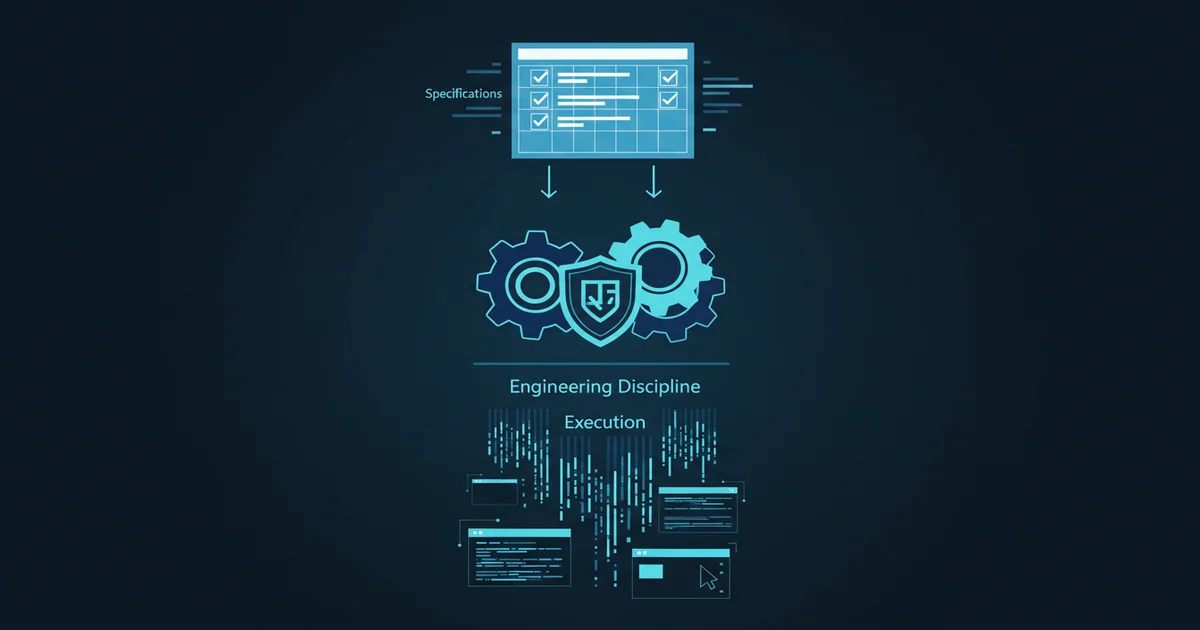
The Three Walls Claude Code, OpenSpec and Superpowers Are Built to Break
If you’ve used Claude Code or any AI coding tool seriously, the three walls below will be familiar. The point of this article is to map each wall to the tool that actually knocks it down — and to flag the common mistake of thinking one tool can do all three.
Wall 1: The AI builds something different from what you wanted. You say “add user login,” it gives you session-based auth when you wanted JWT. You say “payment scanning,” it integrates a real payment SDK when you just wanted a demo. You only discover the mismatch after reviewing the generated code — by then, you’ve already burned tokens and time.
Wall 2: The AI skips engineering discipline. Claude Code’s default behavior is “receive request, start coding.” No Git branches, no tests, no code review. It ships fast, but when something breaks, you don’t know where the problem is. And rolling back is painful because it modified your main branch directly.
Wall 3: Design rationale erodes across iterations. Why bcrypt over argon2? Why /api prefix instead of /v1? Plain Claude Code forgets everything when the chat closes. Add Superpowers and you get a single design.md on disk — good, but the next brainstorming session overwrites it. Three iterations later, the earliest tradeoffs are gone and nobody can reconstruct them.
These problems can’t be solved with better prompts — they require different tools operating at different layers. That’s what Claude Code + OpenSpec + Superpowers, together, are really for: plain Claude Code handles Wall 1 poorly, Superpowers closes Wall 2, and only OpenSpec’s Delta/Archive mechanism closes Wall 3 properly.
flowchart LR
    A["Natural-language
request"] -->|Wall 1| B["Wrong feature shipped
(Session auth instead of JWT)"]
    A -->|Wall 2| C["Skips tests, branches,
code review"]
    A -->|Wall 3| D["Decisions vanish
when chat closes"]

    B --> E["Burnt tokens,
rework"]
    C --> F["Ships fast,
breaks silently"]
    D --> G["No audit trail
3 months later"]

    style B fill:#c53030,color:#fff
    style C fill:#dd6b20,color:#fff
    style D fill:#805ad5,color:#fff
    style E fill:#4a5568,color:#fff
    style F fill:#4a5568,color:#fff
    style G fill:#4a5568,color:#fff
Layer 1: Meet the Three Tools
Claude Code: An AI Programmer in Your Terminal
Claude Code is Anthropic’s official CLI tool for AI-assisted development. Unlike chat-based tools, it lives in your terminal — reading project files, running shell commands, writing code, managing Git. It can autonomously complete an entire “create project → write code → run tests → commit” workflow.
It’s powerful, but has the three problems above: potential requirement mismatches, no enforced engineering discipline, and ephemeral decisions. It needs partners.
Prerequisite: a paid Claude subscription (Pro / Max / Team / Enterprise). Pricing changes often — check anthropic.com/pricing for the current tiers.
OpenSpec: Turns One-Sentence Requirements into Four Structured Documents
OpenSpec is an open-source framework by Fission AI for Spec-Driven Development, specifically solving Wall 1. It expands “I want user login” into:
- proposal.md: Why, what’s in scope, and critically — what’s out of scope (preventing AI from adding unrequested features)
- specs/: Behavioral specifications using GIVEN/WHEN/THEN scenarios
- design.md: Technical decisions with reasoning
- tasks.md: Implementation checklist, each task completable in 2-5 minutes
OpenSpec supports 20+ AI coding assistants, but works best with Claude Code thanks to its subagent capabilities for parallel task execution.
Superpowers: Engineering Discipline as Enforceable Rules
Superpowers is an open-source skills framework by Jesse Vincent and Prime Radiant (140K+ GitHub stars), solving Wall 2. It’s not a standalone tool — it’s skills installed into Claude Code that enforce professional engineering practices.
With Superpowers installed, Claude Code stops jumping straight to coding. It has a set of core skills, and — something the original docs bury — the planning skills actually do persist to disk: brainstorming saves its design doc to docs/superpowers/specs/YYYY-MM-DD-<topic>-design.md and commits it; writing-plans saves plans to docs/superpowers/plans/YYYY-MM-DD-<feature>.md. So “Superpowers forgets everything when the chat closes” is a myth — what it lacks is a Delta/Archive mechanism for multi-iteration history.
When using Superpowers alone, brainstorming and writing-plans trigger automatically. TDD, code-review and the other coding disciplines require explicit rules in CLAUDE.md to take effect:
| Skill | When It Activates | Trigger |
|---|---|---|
| brainstorming | Before creating features or components | Automatic when used alone |
| writing-plans | When requirements need multi-step decomposition | Automatic when used alone |
| test-driven-development | Before implementing features or fixing bugs | Requires explicit rule in CLAUDE.md |
| systematic-debugging | When encountering bugs, test failures, unexpected behavior | Requires explicit rule in CLAUDE.md |
| code-reviewer | After completing a major implementation step | Requires explicit rule in CLAUDE.md |
| dispatching-parallel-agents | When multiple independent tasks can run concurrently | When 2+ tasks have no dependencies |
| verification-before-completion | Before claiming work is done | Requires explicit rule in CLAUDE.md |
Important correction: OpenSpec and Superpowers are two independent systems — they do not automatically chain together. When using
/opsx:apply, Superpowers’ TDD, code-review, etc. will not automatically kick in. To enforce engineering disciplines during apply, you must explicitly add rules to your project’s CLAUDE.md, e.g.:When using /opsx:apply, always follow TDD: write failing tests first, then implement code.
When combined, OpenSpec leads the planning phase, Superpowers leads the coding phase — each owns its stage:
OpenSpec handles:            Superpowers handles:
  Thinking through WHAT        Ensuring HOW it's built well
┌──────────┐               ┌──────────────┐
│ explore  │               │ brainstorming │ ← same JOB, different output
│ propose  │               │ writing-plans │ ← same JOB, different output
│ apply ───┼─────────────→ │ TDD          │ ← requires CLAUDE.md config
│          │               │ debugging    │ ← requires CLAUDE.md config
│          │               │ verification │ ← requires CLAUDE.md config
│ archive  │               │ code-review  │ ← requires CLAUDE.md config
└──────────┘               └──────────────┘
The two planning systems overlap in job-to-be-done (explore → decide → task list) but don’t automatically yield to each other. If you install both, brainstorming still fires on the next feature request unless your CLAUDE.md routes planning to /opsx:propose. You pick one by convention, not by auto-detection — I add a line to CLAUDE.md that says “for any new feature, start with /opsx:propose; skip brainstorming/writing-plans.” Without that line, you end up with a docs/superpowers/specs/ design doc and an openspec/changes/<id>/ proposal for the same feature, out of sync within an hour.
Once planning is routed through OpenSpec, apply enters the coding phase — and Superpowers’ TDD, debugging, verification, and code-review still won’t kick in automatically. You have to spell them out in CLAUDE.md: When using /opsx:apply, always follow TDD — write failing tests first, then implementation.
Without OpenSpec, Superpowers handles everything — brainstorming first explores requirements (and saves the design doc), writing-plans breaks down tasks (and saves the plan), then TDD enforces test-first coding.
One-line summary: OpenSpec handles planning, Superpowers handles coding discipline, Claude Code executes. They don’t conflict — each owns its stage.
Layer 2: Installation — Get All Three Running
Step 1: Install Claude Code
# macOS / Linux / WSL
curl -fsSL https://claude.ai/install.sh | bash

# Verify
claude --version
Step 2: Install OpenSpec
Requires Node.js 20.19.0+.
npm install -g @fission-ai/openspec@latest
cd your-project
openspec init    # Select Claude Code when prompted
Creates an openspec/ directory with specs/, changes/archive/, and AGENTS.md.
Step 3: Install Superpowers
# Inside a Claude Code session:
/plugin install superpowers@claude-plugins-official
You’ll see “You have Superpowers” on next launch — that confirms it’s working.
Step 4: Configure Collaboration
Add to .claude/settings.json:
{
  "mcpServers": {
    "openspec": {
      "command": "npx",
      "args": ["-y", "@fission-ai/openspec-mcp"]
    }
  },
  "permissions": {
    "allow": ["Bash:openspec:*", "Bash:npm:*", "Bash:git:*"]
  }
}
Layer 3: Run It Once — Feel the Full Workflow
Don’t try to understand the theory first — run it and feel what each tool does. We’ll build a user auth API (Express + MongoDB + JWT).
3.1 OpenSpec: Requirements → Spec
claude
> /opsx:propose User auth API with Express + MongoDB + JWT.
> Features: registration (username+email+password), login (return JWT),
> get current user (requires auth).
> Security: bcrypt password encryption, JWT auth for private endpoints.
OpenSpec generates four documents. Your action: open proposal.md, check the Out of Scope section — confirm the AI didn’t add OAuth or password reset on its own.
Refine if needed by editing the files directly — there’s no separate refine command in the core profile.
What you gained: A structured blueprint. All subsequent AI work is based on this document, not your one-sentence description.
flowchart LR
    Req["One-sentence request:
user auth API with Express + MongoDB + JWT"]
    Req --> Propose["/opsx:propose"]
    Propose --> P["proposal.md
Why · What ·
Out-of-Scope"]
    Propose --> S["specs/
GIVEN / WHEN / THEN
behaviour"]
    Propose --> D["design.md
bcrypt vs argon2
JWT TTL · ORM choice"]
    Propose --> T["tasks.md
2–5 min checkboxes"]

    style Req fill:#2d3748,color:#fff
    style Propose fill:#018472,color:#fff
    style P fill:#1e4e8c,color:#fff
    style S fill:#1e4e8c,color:#fff
    style D fill:#1e4e8c,color:#fff
    style T fill:#1e4e8c,color:#fff
3.2 Planning Done, Coding Discipline Takes Over
Remember the division of labor? OpenSpec leads planning, Superpowers leads coding discipline.
The previous /opsx:propose step already completed requirements exploration and design decisions — password algorithm, JWT expiration, ORM choice — all recorded in design.md. OpenSpec’s propose has covered what Superpowers’ brainstorming and writing-plans would normally do.
So when /opsx:apply begins, if you’ve configured TDD and other requirements in CLAUDE.md, Superpowers’ coding disciplines take effect: TDD (tests before code), debugging (systematic troubleshooting), verification (pre-completion checks), and code-review (quality gate before commit). Note: these do not activate automatically — they require explicit configuration in CLAUDE.md.
What you gained: All design decisions are recorded in design.md and archived under openspec/changes/<change-id>/archive/ after completion. Three iterations later, you can still see why version 1 chose bcrypt and version 2 switched to argon2 — Superpowers alone can only show you the latest design doc; OpenSpec’s archive gives you the full tradeoff history. That’s what finally closes Wall 3.
3.3 Confirm Plan, Let AI Execute
Superpowers generates tasks.md with 6 tasks. Spend 5 minutes reviewing task order and acceptance criteria. Then:
> Plan confirmed, start execution
With TDD configured in CLAUDE.md, subagent mode activates — parallel execution with TDD:
[Task 1/6] Project Init ✓
[Task 2/6] Database Connection
  ├─ Write test → Fails (RED) ✓
  ├─ Write implementation → Passes (GREEN) ✓
  ├─ Code Review → Pass ✓
  └─ Git commit ✓
...
What you gained: AI working on an isolated branch (via Superpowers’ using-git-worktrees skill — note this belongs to Superpowers, not OpenSpec, so /opsx:apply will only open a worktree if your CLAUDE.md tells it to), following specs, with TDD enforcement. If it goes wrong, discard the worktree — your main code is untouched. Wall 2 solved.
stateDiagram-v2
    [*] --> RED
    RED: 🔴 RED
Write a failing test
(no implementation yet)
    GREEN: 🟢 GREEN
Write just enough code
to pass the test
    REFACTOR: 🔵 REFACTOR
Clean up while tests stay green
    REVIEW: ✅ Code Review
Superpowers self-audit

    RED --> GREEN: test runs and fails
    GREEN --> REFACTOR: test passes
    REFACTOR --> REVIEW: no regression
    REVIEW --> RED: next task
    REVIEW --> [*]: task list done

    note right of RED
      If any implementation
      exists before the test,
      Superpowers deletes it.
    end note
3.4 Verify + Archive
> /opsx:archive # Don't skip this! Syncs delta specs and archives the change
3.5 Run and Test
npm install && node src/app.js
curl -X POST http://localhost:5000/api/register \
  -H "Content-Type: application/json" \
  -d '{"username":"testuser","email":"[email protected]","password":"123456"}'
# {"success":true,"data":{"id":"...","username":"testuser"}}
Requirements to running API — your work was: confirm requirements → answer design questions → review plan → verify results.
flowchart LR
    U["You:
one-line
request"] --> Propose
    subgraph OpenSpec
        Propose["/opsx:propose"] --> Artifacts["proposal / specs
design / tasks"]
    end
    subgraph Superpowers
        Artifacts --> Plan["tasks.md
review"]
        Plan --> TDD["TDD loop
(RED→GREEN→REVIEW)"]
    end
    subgraph ClaudeCode["Claude Code"]
        TDD --> Exec["edits · tests · git"]
    end
    Exec --> Archive["/opsx:archive
spec delta merged"]
    Archive --> U

    style OpenSpec fill:#018472,color:#fff
    style Superpowers fill:#2b6cb0,color:#fff
    style ClaudeCode fill:#4a5568,color:#fff
    style U fill:#1a202c,color:#fff
    style Archive fill:#c05621,color:#fff
Layer 4: Why Claude Code + OpenSpec + Superpowers Actually Need Each Other
Now that you’ve felt the workflow, let’s understand why removing any tool creates problems. First, a table showing exactly where OpenSpec and Superpowers overlap vs complement each other:
| Capability | OpenSpec | Superpowers |
|---|---|---|
| Requirements exploration | ✅ propose | ✅ brainstorming |
| Task decomposition | ✅ tasks.md | ✅ writing-plans |
| Design doc written to disk | ✅ openspec/changes/<id>/design.md | ✅ docs/superpowers/specs/ |
| Plan written to disk | ✅ openspec/changes/<id>/tasks.md | ✅ docs/superpowers/plans/ |
| Structured 4-file split (proposal / spec / design / tasks) | ✅ enforced | ❌ single design doc + plan |
| Delta + Archive across iterations | ✅ each change in its own folder, archived on completion | ❌ next brainstorm overwrites the previous design doc |
| Auto-loaded as spec-of-truth in new sessions | ✅ via openspec/AGENTS.md | ⚠️ you have to manually point Claude at the plan file |
| TDD enforcement | ❌ | ✅ tests-first, deletes pre-written code |
| Code review | ❌ | ✅ automatic code-review |
| Git branch isolation | ❌ | ✅ using-git-worktrees |
| Systematic debugging | ❌ | ✅ systematic-debugging |
| Pre-completion verification | ❌ | ✅ verification-before-completion |
The common “Superpowers has no persistence” claim is wrong — both systems persist. The real differentiator is OpenSpec’s Delta/Archive model (each change is a versioned folder that survives overwrites) and its auto-ingestion (new Claude sessions read openspec/AGENTS.md without you asking). Superpowers’ design doc is last-write-wins, and you have to manually tell Claude to re-read it. That distinction matters more for teams iterating on the same feature three or four times than it does for a one-shot build.
With this table in mind, it’s clear what breaks when you remove each tool.
quadrantChart
    title Four tool combinations — where they land
    x-axis "Low discipline" --> "High discipline"
    y-axis "Short memory" --> "Persistent memory"
    quadrant-1 "Full triple ✅"
    quadrant-2 "OpenSpec + Claude Code"
    quadrant-3 "Claude Code alone"
    quadrant-4 "Superpowers + Claude Code"
    "Claude Code only": [0.18, 0.15]
    "+ Superpowers": [0.78, 0.22]
    "+ OpenSpec": [0.22, 0.80]
    "Full triple": [0.82, 0.86]
Claude Code Only: Fast but Chaotic
No specification constraints. Different developers get different code styles, inconsistent return formats ({code: 200} vs {success: true}), missing security constraints. A real team found passwords stored in plaintext and private endpoints without auth — issues that only surfaced in production.
OpenSpec + Claude Code (No Superpowers): Blueprint Without a Foreman
Great specs, but no enforcement during execution. Claude may “freestyle” away from the spec. Without TDD and code review rules in CLAUDE.md, there’s no branch isolation — like having perfect architectural drawings but no construction supervisor.
Superpowers + Claude Code (No OpenSpec): Discipline with Short Memory
TDD and code review ensure quality, and the design doc + plan do persist to disk (docs/superpowers/specs/ and docs/superpowers/plans/). What’s missing is the Delta/Archive layer: the next brainstorming session overwrites the previous design doc rather than versioning it. Three iterations in, you can no longer reconstruct why the original design chose what it chose. For solo projects shipping once, this is fine. For teams iterating on the same feature, it bites.
All Three: Blueprint + Foreman + Construction Crew
OpenSpec (Requirements) → Superpowers (Discipline) → Claude Code (Execution)
   │                        │                          │
   ├─ proposal.md           ├─ Brainstorming           ├─ Write code
   ├─ specs/                ├─ TDD enforcement         ├─ Run tests
   ├─ design.md             ├─ Code Review             ├─ Git operations
   └─ tasks.md              └─ Subagent parallelism    └─ Install deps
A key design detail: OpenSpec deliberately caps each spec file around 200–300 lines (noticeably leaner than alternatives like Spec Kit). Specs that are too long don’t get read, and the AI loses context inside them. Specs should describe behavior (GIVEN/WHEN/THEN), not implementation steps.
Another counterintuitive design: Superpowers’ TDD skill deletes code written before tests. Not warns — deletes. This prevents AI from writing implementation first and then retrofitting tests that only verify “code does what it does” rather than “code does what it should.”
Layer 5: Bigger Cases — Where the Ceiling Is
Case 1: Blog System in One Day
Next.js + PostgreSQL blog with auth, article CRUD, Markdown rendering, and comments. Four independent OpenSpec changes running in parallel, completed in 8 hours.
Output: ~2,500 lines, 87% test coverage, 23 commits, zero bugs in the first week. Time breakdown: requirements 19%, planning 13%, execution 56%, verification 12%. One-third of the time spent before writing code — but that’s exactly why the other two-thirds had virtually zero rework.
Case 2: Payment Checkout — 11 Issues Found Before Any Code
A developer used the full stack for a payment checkout demo (React + FastAPI + MySQL). After OpenSpec generated specs, Superpowers’ brainstorming reviewed them from three perspectives (architect, QA, developer) and found 11 issues before writing a single line of code:
- Critical: Missing order lookup endpoint, no API parameter validation
- Medium: Incomplete dependencies, missing database indexes
- Low: Unclear demo mode scope, missing test data steps
Catching these before coding reduced fix costs by an estimated 5-10x. Tasks expanded from 50+ to 74, and core functionality reached 100% completion.
Key insight: The value isn’t just “AI writes code for you” — it’s “AI finds problems you hadn’t thought of before you start coding.” Pure Claude Code can’t do this because it starts coding immediately without multi-perspective requirement review.
Layer 6: When NOT to Run the Full Claude Code + OpenSpec + Superpowers Stack
flowchart TD
    Start["New task arrives"] --> Dur{"Estimated effort?"}
    Dur -->|< 2h prototype| Solo["Claude Code only
no specs, no TDD"]
    Dur -->|2–8h personal| Pair["Claude Code +
Superpowers
TDD + worktree"]
    Dur -->|4–16h team| Team{"Team collab /
long-term maint?"}
    Dur -->|Large / parallel| Full["Full triple +
parallel worktrees"]

    Team -->|Yes| Full
    Team -->|No| Pair

    Solo --> Risk1{"Shipping to prod?"}
    Risk1 -->|Yes| Pair
    Risk1 -->|No, throwaway| Solo

    style Solo fill:#4a5568,color:#fff
    style Pair fill:#2b6cb0,color:#fff
    style Full fill:#018472,color:#fff
    style Start fill:#1a202c,color:#fff
Not every project needs the full stack. Over-engineering is just as harmful as under-engineering.
| Scenario | Recommended Combo | Reasoning |
|---|---|---|
| Quick prototype (<2h) | Claude Code only | Requirements aren’t settled; specs waste time |
| Individual medium feature (2-8h) | Claude Code + Superpowers | TDD and Worktree prevent disasters; no decision auditing needed |
| Team medium feature (4-16h) | Full stack | Team needs spec alignment and decision trails |
| Large project / parallel features | Full stack + parallel Worktrees | OpenSpec supports concurrent changes |
| One-off scripts | Claude Code only | No maintenance needs |
| Learning / teaching | Full stack | The workflow itself is the curriculum |
Start with Claude Code + Superpowers, not the full triple. Superpowers’ TDD and Code Review add value to any project. Add OpenSpec when “decision traceability” becomes a real bottleneck — you’ll naturally understand its value at that point.
Five Common Pitfalls
Pitfall 1: Specs that are actually pseudocode. Specs describe behavior (GIVEN/WHEN/THEN), not implementation. Over-detailed specs constrain AI’s choices and are expensive to maintain.
Pitfall 2: Forgetting to archive. I’ve done this. Finished a feature, skipped /opsx:archive. Next session, AI read the old spec and reimplemented existing functionality. Rule: archive is always the last action.
Pitfall 3: Skipping brainstorming. Not small talk — it aligns you and AI on technical decisions. Skip it and AI guesses your tech choices. You discover the mismatch during code review, when change costs are high.
Pitfall 4: Confirming plans without reading them. 5 minutes reading tasks.md saves 1-2 hours of rework. Check task ordering, missing tasks, acceptance criteria clarity.
Pitfall 5: Full pipeline for 30-minute tasks. The complete propose→archive cycle can take 2 hours. Tools serve goals, not the other way around.
Quick Reference
Command Cheat Sheet
Core Profile (default):
| Stage | Command | Purpose |
|---|---|---|
| Explore | /opsx:explore | Enter explore mode — think through ideas with AI |
| Requirements | /opsx:propose <feature> | Generate proposal + spec + design + tasks |
| Implement | /opsx:apply | Implement code task-by-task from spec |
| Archive | /opsx:archive | Merge Delta Spec, archive change |
Simplest flow: propose → apply → archive. Use explore as needed.
Note: Commands like
/opsx:ff,/opsx:refine,/opsx:validate,/opsx:verify,/opsx:continue,/opsx:syncare not in the default core profile. To enable them, runopenspec config profileto switch to the expanded profile, thenopenspec updateto install the additional skill files. For most workflows, the four core commands are sufficient. To modify generated artifacts (proposal.md, design.md, tasks.md), simply edit the files directly.
Beginner Roadmap
Week 1: Claude Code only
  → Get comfortable with AI collaboration in the terminal

Week 2: Add Superpowers
  → Experience TDD, Code Review, Worktree isolation
  → Feel the difference between disciplined and undisciplined AI

Week 3+: Add OpenSpec when needed
  → When "I keep re-explaining requirements" or "teammates can't follow my logic"
  → That's when OpenSpec earns its overhead
Final Take
The essence of this combination is encoding human engineering best practices (requirements alignment, TDD, code review, decision recording) into rules AI must follow. Not letting AI freestyle — making AI create within constraints.
Three things to remember:
- Start small. Claude Code → add Superpowers → add OpenSpec when needed. Don’t go all-in on day one.
- Tools don’t replace judgment. You still need to read, review, and evaluate AI-generated code. Tools amplify efficiency, not capability.
- Don’t let process become a cage. 30-minute tasks don’t need the full pipeline. Quick prototypes don’t need specs. Choosing the right combination — that’s real engineering maturity.
The ultimate goal isn’t “get AI to write more code” — it’s making AI-generated code as reliable, maintainable, and traceable as code written by a disciplined human engineer. Whether that’s worth the tooling investment depends on your project scale and team needs. Now you have both the decision framework and the hands-on path to get started.
Related Reading:
- Superpowers Deep Dive: The Skills Framework That Turns Claude Code into a Senior Engineer
- The Ultimate CLAUDE.md Guide: Training Your AI Assistant to Be Your Ideal Colleague
- Harness Engineering: Dramatically Improve AI Agent Performance Without Changing the Model
- Claude Code Complete Guide: From Beginner to Expert
Comments
Join the discussion — requires a GitHub account